Clark Media Productions

Clark Media Productions is a place for me to share my love of audio production, music, trombone, and music technology. Subscribe to my email list for late breaking blog posts, videos, and educational content!

Cool Stuff at ITF 2016 - part 2

Picking up where days one and two left off, Saturday at the 2016 International Trombone Festival saw some great events and visits to exhibitors.  I will admit straight away to being a little ashamed that I missed Peter Ellefson’s 9AM recital, but I had a good excuse.  I have wanted to see the High Line on Manhattan’s lower West side for some time now, so while my dad judged one of the competitions, I took the 1 train down to Penn Station and walked over to 10th Ave. where the High Line begins.  Built on a converted elevated rail line running along 10th Avenue, the High Line is a wonder of urban design, landscaping, and ingenuity.  It was a such an enjoyable visit, I was sorry when I reached the Southern terminus at Gansevoort Street. 

The High Line - NYC

So, after a quick ride on the 1/9 back up to Lincoln Center, I managed to catch the second half of the World Trombone Quartet.  The quartet usually consists of Joe Alessi, Michel Becquet, Jorgen van Rijen, and Stefan Schultz.  On this particular performance, Hakan Bjorkman and Denson Paul Pollard substituted for Becquet and Schultz.  Wow, what a group!  I caught two solo performances, the first by Hakan Bjorkman of the Carnival of Venice.  He played the original Arban version, and holy cow did he play it!  Besides amazing technique, Mr. Bjorkman has all the other tools that made it obvious why he would sub in a group called the World Trombone Quartet.  Unfortunately, Mr. Bjorkman was in a bicycling accident at home a few days after the festival ended, and sustained some major injuries.  According to what I see on Facebook, he appears to be recovering well and out of immediate danger.  That is great news, and I wish this fantastic musician my very best in his recovery.  Having had a couple of bad cycling accidents myself over the years, I feel his pain, and I hope he reaches full recovery.  Following the Arban, Jorgen van Rijen performed a piece called Slipstream.  This utilized a loop station with Mr. van Rijen providing the loops in a live recording environment.  What a cool piece!  Jorgen’s playing is so smooth, even, and effortless, he makes things sound so easy.  This is a genre that seems new, but has a lot of elements that have been around for years.  Improvisational in nature (I assume), the piece really develops as if you are hearing it for the first time, and made this listener feel like I was hearing something being literally composed right in front of my eyes.  I am going to have to definitely check out the piece and the loop station setup.  The final piece on the program was for the full quartet, First Trombone Quartet by Steven Verhelst.  This was a perfect closer and featured a little bit of everything, including some lovely clog dancing by all 4 players.  Besides his beautiful bass trombone playing, Mr. Pollard provided the closest approximation of what my own attempt at clog dancing would look like… but it was very entertaining!  As serious as Joe Alessi might appear to us all, he showed once again his great sense of showmanship and humor, along with Jorgen and Hakan.  Really a fun program and great ensemble.  The have a new CD available - buy it and check it out.

I heard bits and pieces of a few other things - I’m going to list them in no particular order… There was, as always, a lot to see and hear - way more than I could absorb!  

M&W Trombones - Matt Walker and Mike McLemore have continued the tradition they began when both worked for Gary Greenhoe - the tradition of making beautifully crafted horns that play great.  Their new instruments are stunningly beautiful, and they play just as well.  I only wish I was in the market for a new horn!  These guys will have their work cut out for them in the years ahead meeting demand, I imagine.

S.E. Shires - while not a Shires player myself, I have really liked some of the horns I have played that this Boston based outfit makes.  Like the M&W horns, these instruments are beautiful, and play amazingly well.  They make the FINEST alto I have ever played (the edition with a b-flat attachment), and were I doing more alto work these days, I would find a way to pay for one and add it to my stable.  BUT, what I thought was really super cool is the new screw bell tenor trombone edition they have come up with.  A concept that has been around for a while, Shires has taken it and made it a truly useful and practical option.  In addition to a bell section that is already screw bell converted, they have created an amazing little hard case.  People, this thing is SMALL.  Slightly larger than a violin case, the design is ingenious, and very protective.  If I flew a lot with a trombone, I would buy one in a heartbeat.  Just amazing.  You have to check it out!

This was a prototype case Shires has developed for their new screw bell tenor trombone option... I was told the final production case will be slightly thicker - but it is still super compact!


Soul-O mutes - This is the one thing I came to the workshop dead set on buying before I left.  I walked up to the booth with cash in hand determined to not leave without one!  The Soul-o folks are very friendly, and have created a bucket mute that is the sweetest sounding version of the genre I have ever played.  They have also begun making a cup and straight which I unfortunately didn’t have a chance to try, but if they play as well as the bucket, I imagine I’ll end up with those at some point as well.  I have some plans for some recordings using bucket, I’ll keep you posted when I get them recorded.  Looking on their website, most of the big names in the LA scene these days seem to be playing their mutes, so they are definitely a hot commodity!

Edwards/Griego mouthpieces - As always Christan had his full arsenal available to try.  Again, I didn’t play any horns as I just didn’t want to make myself “need” another horn, but the Edwards remain as popular as ever.  If you haven’t checked out Christan’s line of mouthpieces, they are truly beautifully made and sound great.  

Some other people I ran into or met for the first time:

  • Doc Marcellus - I always love seeing Doc.  He is such a wonderful person, and never fails to make me feel glad to be a trombone player.
  • Carol Jarvis - I met Carol briefly for the first time.  I have only recently become familiar with her playing, and I really enjoy her beautiful style of performing.  Her new album is great.  I downloaded it as we were driving out of Manhattan, and it was the perfect accompaniment for our drive through the Lincoln Tunnel and back to DC.  Carol is beginning to work with ITA on their social media presence, which I think is a great move on ITAs part.  The organization is definitely behind the times in that respect, and I think they will see some good growth, especially among younger players, with a more concentrated effort in social media.
  • Jon Whitaker - Jon was conducting the Cramer Choir this year, and it was great to see him, albeit briefly.
  • Joe Dixon - Joe has been a teacher in Texas for a number of years and is always a great resource for information about teaching.  He has a great website with a lot of materials he has developed for use with his students over the years.  MANY of his former students play in major symphonies all over the world.
  • Steve Norrell - It was a great pleasure to see and hear Steve again.  He played in the Juilliard alumni choir, and it’s amazing to think how many performances this man has played at the Metropolitan Opera over the years.  I remember vividly hearing a master class he gave at the 1991 trombone workshop in Rochester.  His sound and concept of playing has been burned into my brain ever since!
  • Dave Taylor - I already mentioned Dave in Part One, but he is always such fun to be around.  A man that is all about the music, he is an inspiration.  His interest in young players and his care for their development is evident in the way he interacts with people he meets.  A gentleman and a New Yorker in the very best sense of the term.

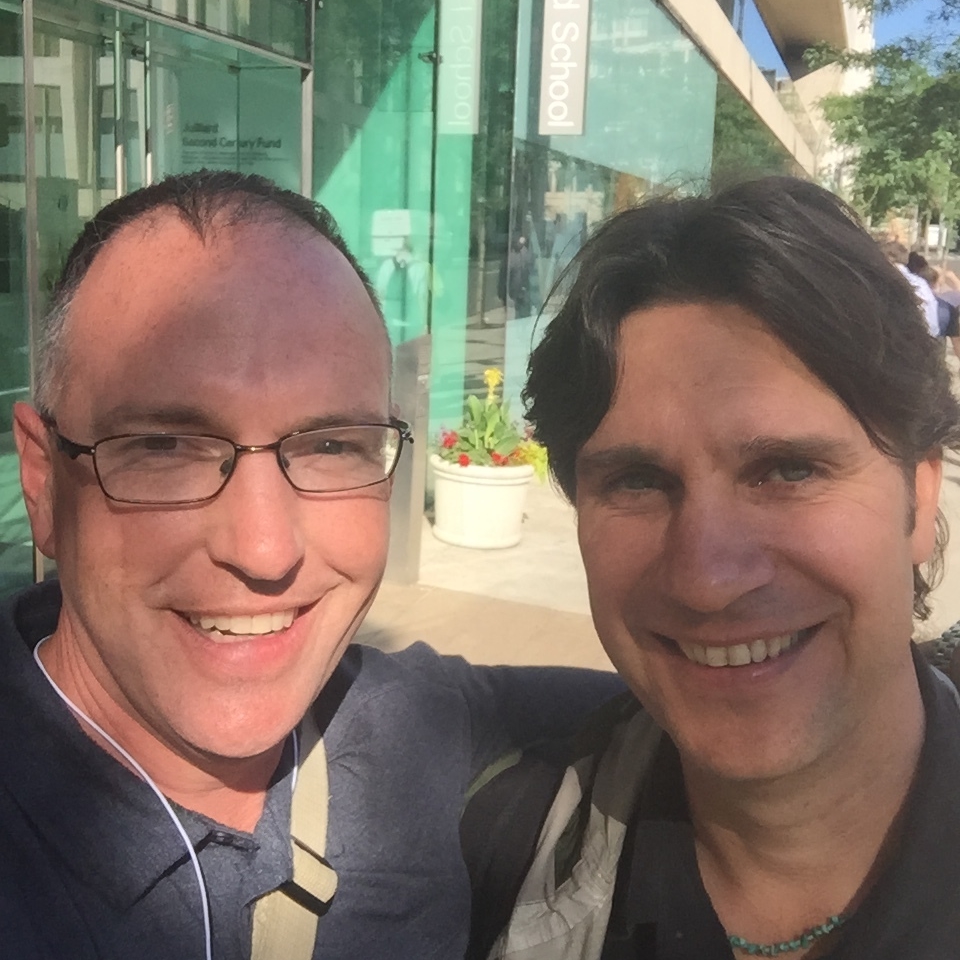
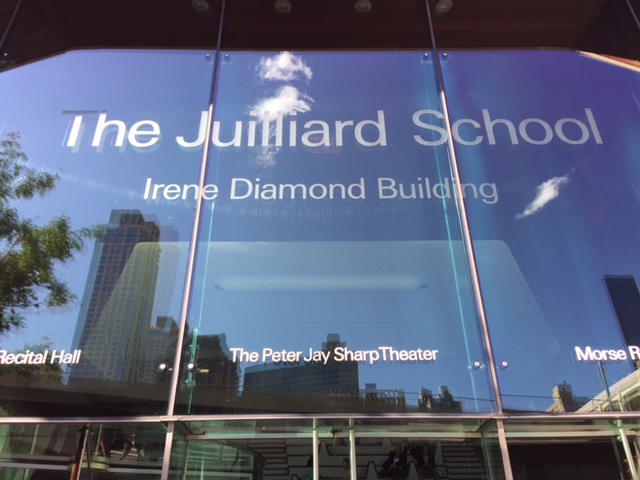
The Juilliard Alumni Choir performed an afternoon concert which was well attended and sounded beautiful.  It was such great fun to be back at Juilliard and get to perform a little with such great players and friends.  Per Brevig did a fantastic job getting the group ready in basically one rehearsal to play a very nice program.  Hearing many alumni who attended Juilliard before me, and connecting everyone’s lineage of teachers and experience at school was really amazing.  This isn’t the first time I’ve experienced this in an “alumni” event.  They can be a great way to bring a sense of camaraderie to a group that might not otherwise ever meet, much less perform together.

After the Alumni concert, it was time to do some more sight seeing and “New York stuff”.  We had a blast and really enjoyed the rest of our weekend.  Many thanks to Joe Alessi, Jack Schatz, Per Brevig, The Juilliard School, and the ITA for a fantastic experience and weekend.  If you haven’t been to an ITF, try to get to one at your first possible opportunity - you won’t be disappointed!  Next year's festival is at University of Redlands in Redlands, California, June 28-July 1, 2017.


My view from the other side of the bell - recent audition comments

Recently, I sat on the audition committee for two days worth of auditions for a trombone opening with the U.S. Marine Band in Washington, DC.  73 candidates came to the audition, and as always, it was a very educational experience for me.

First of all, if you are a performing musician, and you can find a place to sit on some sort of audition or competition committee, I highly recommend you do it!  Especially with band and orchestra auditions, where everyone is playing the same short excerpts one after another, you get a vivid sense of what works, and what doesn’t.

I’m not here to poke holes in anyone’s performance the day of the audition.  Auditions are very difficult situations, one of the most difficult you can experience as a performer.  Nerves, environment, bad luck… many, many things affect the outcome of an audition.  To be successful, you must be prepared to take a lot of them!  Auditioning is a skill, and it’s one that gets better the more you do it.  I have colleagues who won their audition on the first try.  Others, like myself, took multiple auditions.  I took 6 auditions for military bands, with three being for the Marine Band alone, before I was hired.  What follows are my observations about things that I feel can be corrected, or at least minimized, by preparation and habits, based on what I heard from a large majority of trombonists at this audition.

First, time and rhythm is critical.  I have written about this before, here.  The very first, and most noticeable thing, to me, is a person’s time.  I’m not talking about playing correct rhythms, but the consistency with which you apply tempo and subdivision to everything you play.  Truly subdividing, and applying that subdivision consistently across the entire span of a round of excerpts, is what gets your foot in the door.  Most people would be surprised at how few players are able to actually do that… It was very evident to me that very few auditionees record themselves, and listen to the recording focussed on their time consistency.  I mean, record everything.  I feel that in the final weeks before an audition that there are only two ways to practice.  Slow practice working on any technical aspects of an excerpt that need work, ingrain pitch relations, and making certain that every note is centered is critical.  Second, you should be performing the excerpt just as you would in the audition, and you should record it and listen back immediately.  99% of players won’t do this, especially the recording part, because it’s tedious and it takes a lot of time.  One very real benefit of this kind of practicing is that you can play for much longer periods.  When practicing alone, the playback time serves as built in rest, and the constant alternating between playing and listening gives you enough rest that you don’t get tired nearly as fast.  


Finally, put yourself into multiple mock audition situations, using all the visualization skills that you possess to develop some stress and nervousness.  Perform the excerpts exactly as you will in the audition either by themselves or as part of a set or “round”.  Immediately listen back and listen for ONE thing.  In this case, time.  If it’s not exactly right, it’s not right.  There is no close enough.  It must be metronomic.  If it’s not, and I’m listening to your audition, I will think that your time is not very good, and I’ll wonder how it will be to play a concert with you in the section and whether you will make my job easier.  Of course, no one is perfect!  Everyone will have inconsistencies, but you have to do everything you can to minimize them.

Let’s talk about pitch.  We opened our first round (and semi-finals) with Mozart Requiem.  The relative intonation of the opening B-flat statement is critical.  If the first 3 measures aren’t in tune, it’s very hard to recover the confidence of the committee.  Again, record and listen.  This applies throughout the round, but especially in the beginning.  Another place there was a lot of “pitchiness” was in the eighth note runs of Hungarian March.  Practice them slow, record, and listen.  Yep, you are gonna get REAL tired of hearing me say that!

Articulation is often a very telling aspect of a candidates abilities as well.  “Breaking up” and “frackiness” are signs that a player may not be centering each note, or that they are playing beyond the point of controlling their sound at higher volumes.  Being able to transition from the more forceful articulations of something like Hungarian March to the lightness of Brahms Academic Festival, or the quiet touch needed for Saint-Saens Organ Symphony is a skill to develop.  Hearing what you want those articulations to sound like in your head is critical.  We play what we hear in our head, and if we aren’t thinking about anything in particular, then we leave to chance what exactly is going to come out of the horn.  Again, listen to your recordings to see if what you THINK you are doing is what’s actually coming out!

Speaking of higher volumes…. volume and tone quality work together to present a total picture of your characteristic sound.  They give the listener a real sense of your musical goal, and your sensibilities.  Everyone has a unique sound, and I know I don’t expect anyone to fit in to a narrow definition of “great sound”.  However, many players play louder than they have to, all the time.  In most cases, it seems to be an awareness issue.  I think we get so used to playing loud in ensembles, that we don’t realize just how loud we are playing when we’re by ourselves.  Many people’s preliminary round sounded like they were simply trying to play too loud.  If it’s a loud excerpt like the Ride, or Heldenleben, then great.  You have to leave yourself some room to show some dynamic contrast, as well as show the committee that you are a conscientious (and conscious) musician.  Pick your places for both loud and soft dynamics, and you will show greater contrasts and sensitivity.

Finally, remember that you are playing for a group of people, not just one individual.  Many people I have sat with on audition committees have different things they are listening for.  We all have our individual biases and dislikes.  Cover as many bases as you can, and do your best to showcase your excellent musicianship within the context of solid fundamentals.  It’s always eye opening to see how far great fundamentals can take someone.  I think we sometimes trick ourselves into thinking we have to offer something unusual, or musically out-of-the-ordinary to set ourselves apart.  Time and again, the thing that gets people noticed is doing the basics exceptionally well.  

I would like to offer my encouragement to the many players that came to this recent audition, and maybe didn’t progress as far as they had hoped.  It is a life-long battle, this art we call music and this piece of plumbing called the trombone.  Persistence is key.  Glenn Dodson told me he auditioned seven times for the Philadelphia Orchestra.  He also used to tell his students, “there’s always room at the top.”  So, so true.  I remember reading somewhere that the late Jerome Ashby took around 30 auditions before he joined the French horn section of the New York Philharmonic.  Among the ranks of the great players, you will find many (all!) that just didn’t give up.  Continue your hard work, know that it never gets easy, and accept that you will have to continue the uphill battle if you want to reach your goals.  Thanks for reading, and happy practicing!


A little gear review (and maybe a little making fun of trumpet players) 😃

There’s something about trombone players and our toys.  I mean, don’t get me wrong, we’re not near as bad as trumpet players.  I only own about 25 mouthpieces; however, I’m embarrassed to say I do own 7 different straight mutes… must be all that time hanging out with trumpet players, who always seem to have some crazy new mute to try… “Have you heard the new XYZ cup mute?  It’s made out of titanium, with a rosewood bottom, and organic whiskey-pressed hemp corks!”  No joke, it’s like a disease with these people… 

So, after all that, what am I gonna post this week?  Yep, a GEAR REVIEW.  Groan.  But, hey, it’s cool recording gear, so it’s all good!

A friend just asked today what kind of digital recorder I recommend, with the choices being made up of the Zoom family of recorders that have XLR mic inputs.  I own and use a Zoom H5 regularly, and that’s what I suggested to him as a good tool for his needs.  So, I decided a full review is in order!

Now, there are plenty of places to go for technical details, sampling rates, nitty-gritty that many people are into, but most people can’t hear/use/tell anyway when it comes to technology.  What I wanted to review was the ways you can USE this piece of tech.  I’ve had my H5 for a year or so now, and it has so many uses, it’s hard to nail them all down.  So, I’m going to talk about the features I use regularly, and that are particularly handy to the performing/rehearsing/practicing musician...

  1.  Built in mics - pretty obvious, but this feature alone is what really built the Zoom family of recorders into the commonplace gear they have become… The H5 built in mics are fine.  You have the option of swapping out the mic capsule/cartridge for some other options.  Among those options are:  a “better” pair of mics that allow 90 and 120 degree (ORTF) stereo angle (this mic comes standard on the H6), a mid-side mic capsule (similar to what the Zoom H2 does natively), a shotgun mic capsule, and another input containing to XLR combo inputs.  It is important to note that when you add the additional XLR inputs via the cartridge, it does NOT provide phantom power… You would have to get that from somewhere else… 
  2. Audio Interface mode - if you plug the Zoom in to your computer via USB, you get a selection menu on the H5 asking you if you want to use it as a card reader, or as an audio interface.  Silly me, I didn’t realize when I bought it that it essentially does what other units like the Focusrite Scarlett 2i2 does… Allows you to run audio from your microphones into your computer for recording, plus monitor through headphones.  Well, the Zoom does all that and then some!  If I were starting over, I would just by the Zoom and save the $150 I spent on the Focusrite.  I might note that I have had problems with my Scarlett 2i2 unit, but my Zoom has functioned flawlessly.  Hmm… 
  3. Phantom power and 2 XLR mic inputs - plug in your pro microphones as needed, and power them with the correct voltage, easy-peasy.
  4. Backup track - this has become a feature I rely on consistently.  Oftentimes, when I’m the one performing, I want a recording but I may not have the time or focus to spend on getting recording levels set perfectly.  I may arrive at a gig early, set up the recording gear, then I need to spend the rest of my pre-concert time warming up, preparing music, and getting ready to actually perform.  The Zoom H5 will record a backup track, at -12db below the levels you set on the unit.  This allows you to make your best guess as to what the best level is for your performance, but if you get it wrong and have some clipping, you can just use the lower level backup track as a substitute.  With modern DAWs, this is very easy to do and get the same audio quality out of the lower gain track.  Very handy.
  5. AA battery power - common battery anywhere in the world, and the unit runs a long time on a fresh set, enough said.
  6. Files/folder storage structure - I really like this feature.  On the surface, and in its use, it seems to be a bit of a pain in the ass, but I find it very useful.  I can record multiple practice sessions or performances, and just make each one a different folder.  Useful for when I’m too lazy to go home and download what I’ve recorded, right away, or for when I need to preserve multiple sessions on the same memory card.
  7. tripod mount - 1/4”-20 female thread on the bottom, makes this unit easy to mount on a camera tripod.  I carry a Bogen tabletop tripod with mine, which keeps it stable on whatever surface I rest it.  
  8. Audio-for-video - mount the H5 on the hot shoe of your DSLR and you can connect it to the audio in of your camera.  On some DSLRs, you may need an aftermarket cable, but you will be able to provide excellent audio to your videos, as well as monitor your audio through headphones while you’re recording.  Alternatively, use your smartphone for the video and record your audio separately on the Zoom, then sync up in your editing software.  Use a loud clap at the beginning of your video to give yourself a sharp spike in the audio waveform - this will make aligning to the video and audio very easy.  
  9. Multi-channel recording ability - normally, the H5 is set up to record through its stereo microphone pair.  If you set it to multi-channel recording, you may record separate inputs simultaneously.  I most often use this to record through my Rode NT1s as a stereo pair, while adding my Rode Videomic Pro through the line in/mic-in jack located right by the built in microphone pair.  Very handy.  You can also use the stereo pair built in to the Zoom as well as a separate pair of lavalier mics for video dialogue.  

So, as you can see, there are a ton of ways to use the Zoom H5 as a creative tool, and to make it the cornerstone of your portable audio/video setup.  Like I said, no crazy technical discussion with this review, but I wanted to highlight some real world functions that make these little units such a great investment for the performing musician.  For sheer portability, versatility, and ease of use, the H5 is very hard to beat.  If you need 4 mic preamps, go ahead and get the H6.  If you just need the most basic of the basic, check out the H1 and H2.  The small size and mid-side stereo capabilities of the H2 are quite amazing for the price.  Here’s my favorite places to purchase the H5:  B&H Photo-Video, Adorama Camera, and Amazon.

Thanks for reading, as always.  If you have found other handy uses for the Zoom series of recorders, please post in the comments!  If you aren’t subscribed to the Virtual Trombonist, then please sign up!


Powered by Squarespace